Improving filtering in my SDR receiver
A while ago, I built and made available a dual-band VHF/UHF OpenWebRX+ Internet SDR receiver, https://sdr.nico.ninja. Time passed, and things changed. I replaced both RTL-SDR.com v3 SDR receivers with my old, unused HackRF One. I also decided to cover just the VHF ham radio band, from 144 to 148 MHz (and a bit more on each edge), since most hams around here are most active on the 2-meter band.
Also, with the installation of my HF shack, I moved my antennae to the building’s terrace, took advantage of the space up there, and moved the SDR and antenna.
Not much surprise to me, the HackRF One is a hell of a waterfall full of noise, nevertheless I wasn’t too hooked to the 2m band, so I left it as it was, noisy, but with a nice antenna deployment, 50 meters above sea level.
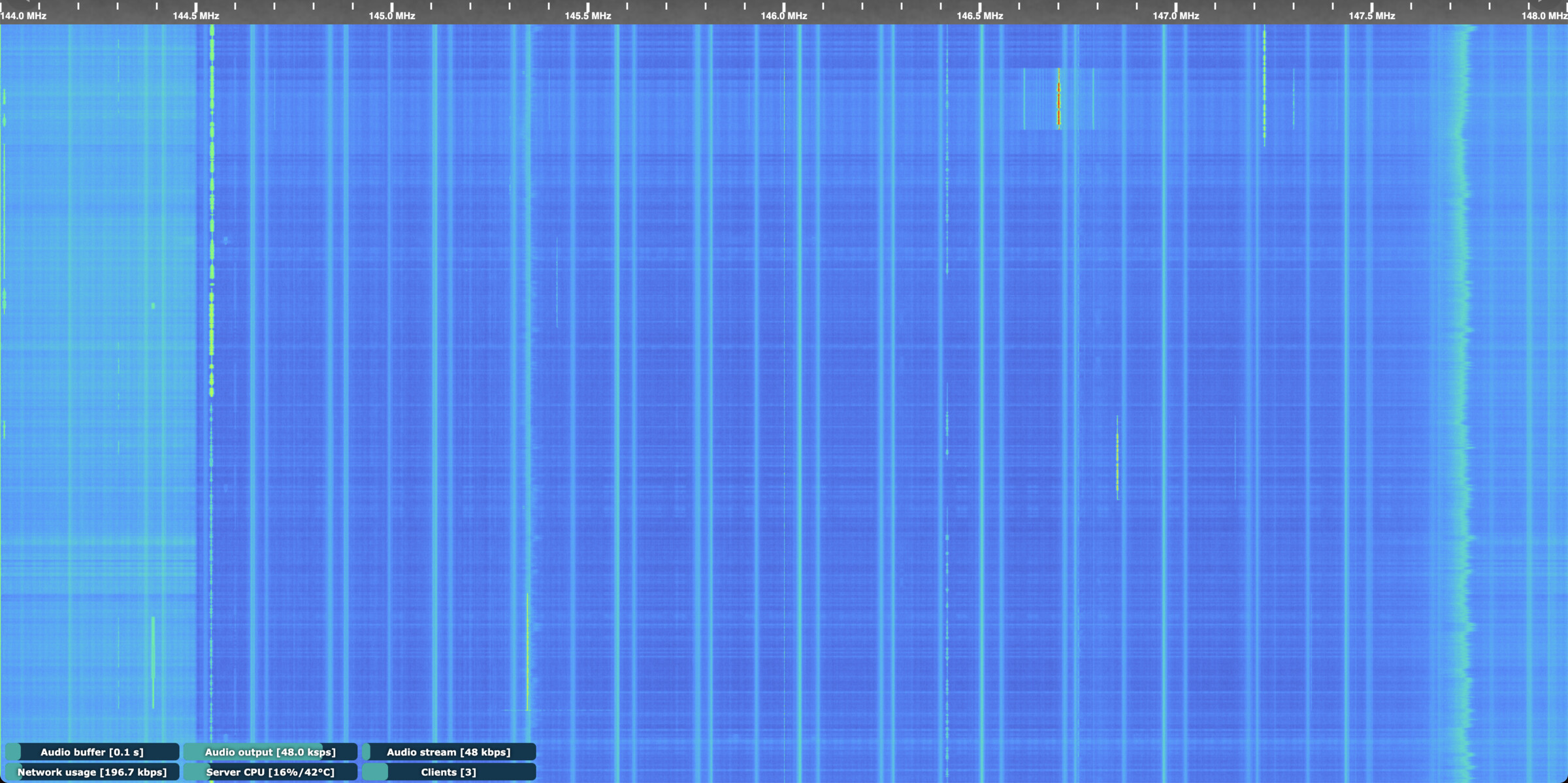
A few weeks ago, I decided to investigate further into the noisy figure of my SDR. Despite many people complaining that the HackRF board is noisy by design and prone to inducing interference from one of the internal clocks. Moving down the gain controls a bit didn’t do much, really, as you can see in the following screenshot.
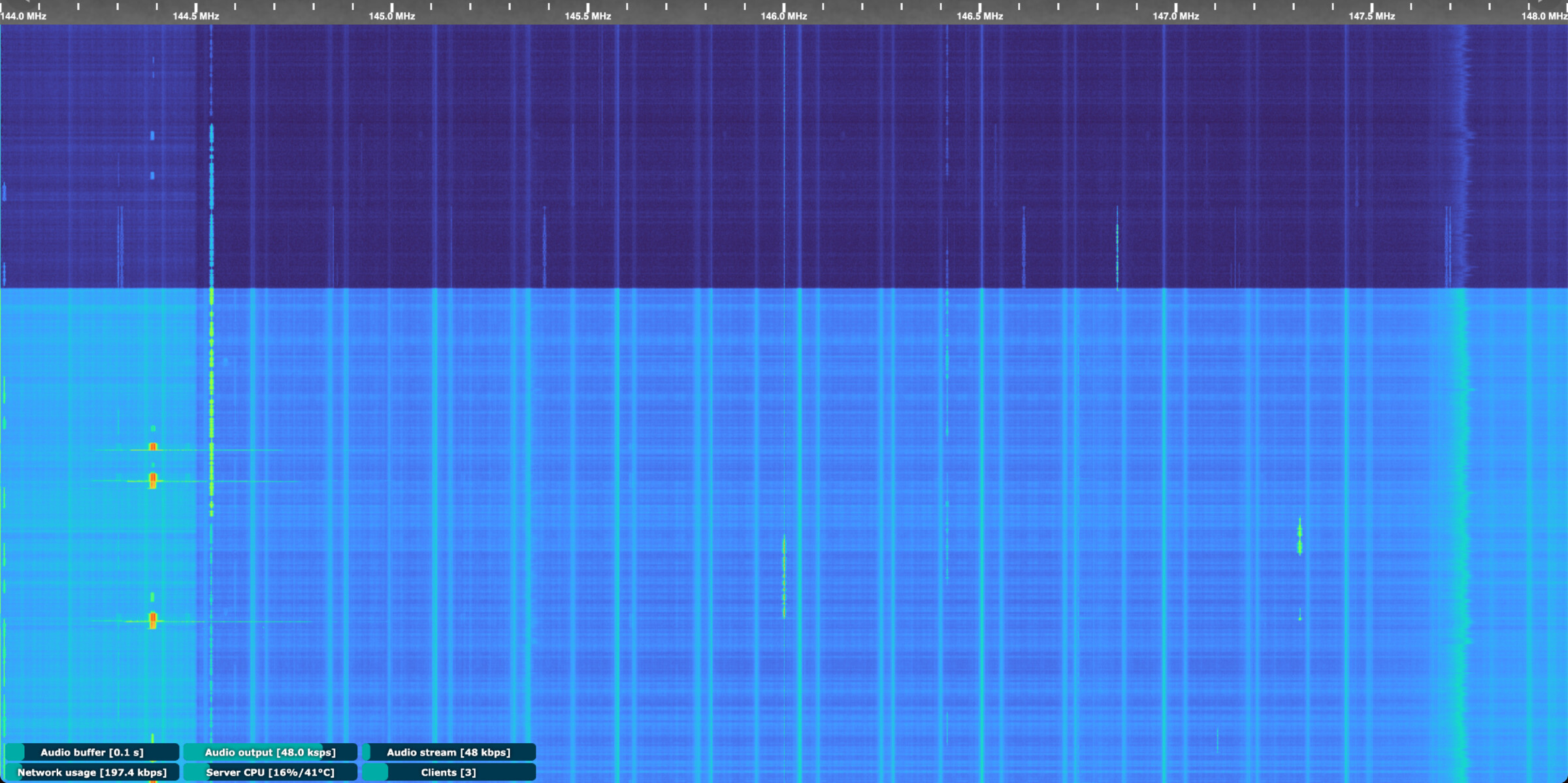
But I found that setting the LNA gain to 0 and adjusting the VGA gain reduced much of the internally induced noise. So I thought I could hook up an SPF5189Z LNA I had in my radio box. Coupled with the homemade FM band-stop filter, this should do a pretty good job. Even better, I also added several ferrite beads to the USB and coaxial cables.
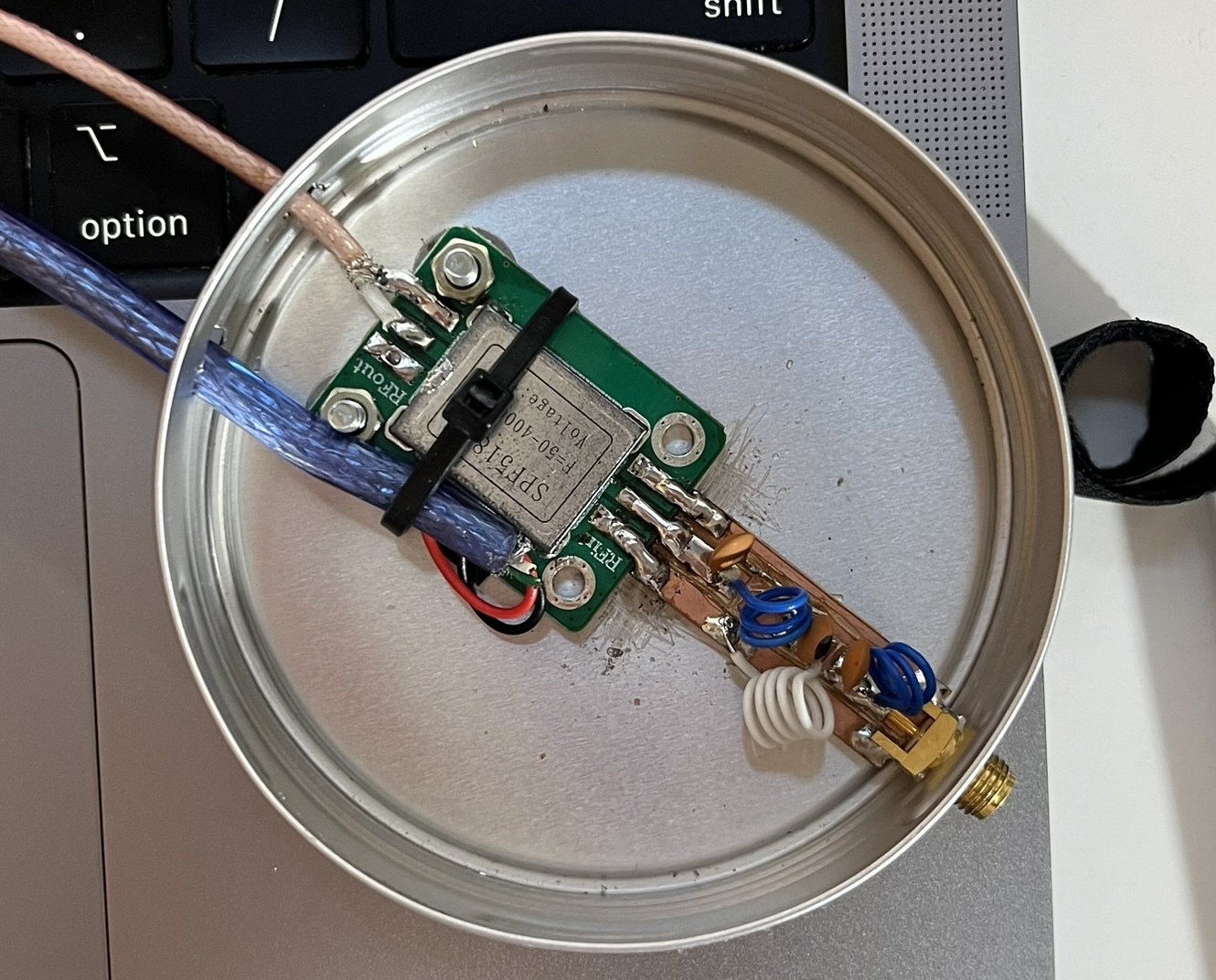
And indeed that was it.
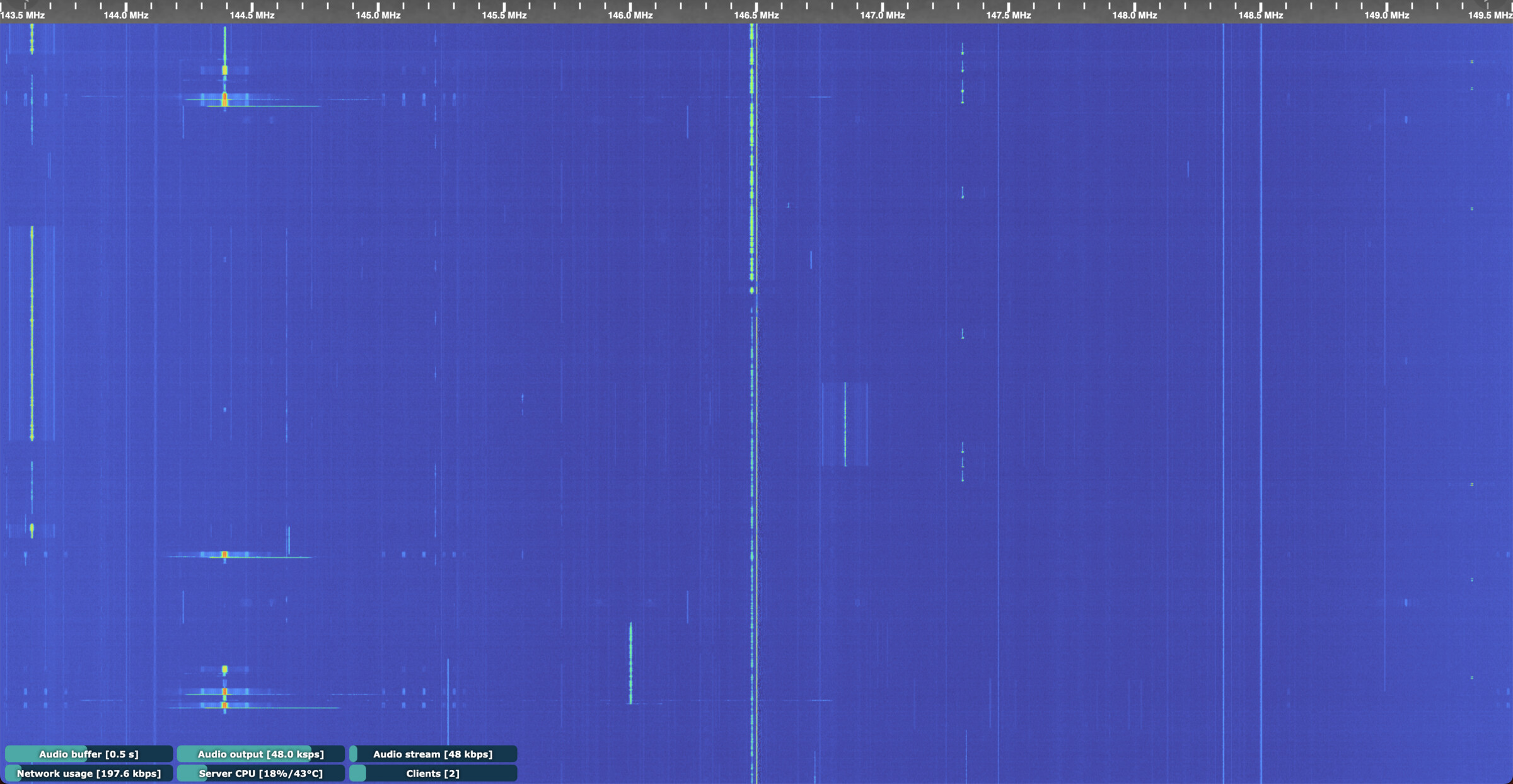
Although I still run the SDR with the not-so-good Flower Pot antenna, it works very well, I guess, due to the high elevation in this zone.
Next steps: replace the Flower Pot with something vertical and omnidirectional with higher gain, and modify the SPF5189Z to feed it through a bias-tee.
Newer: Flipper Zero APRS Transceiver
Older: RadioBerry on a Yaesu FT-80C